


Image: Bill Rivard
A Stanford-led team has discovered how to push iron into a higher-energy state than ever seen before, a feat that could reshape the future of lithium-ion batteries and other energy technologies.
The breakthrough shows that iron can release and reabsorb more electrons than previously thought possible, potentially enabling batteries that are both more powerful and far cheaper than today’s cobalt- or nickel-based versions.
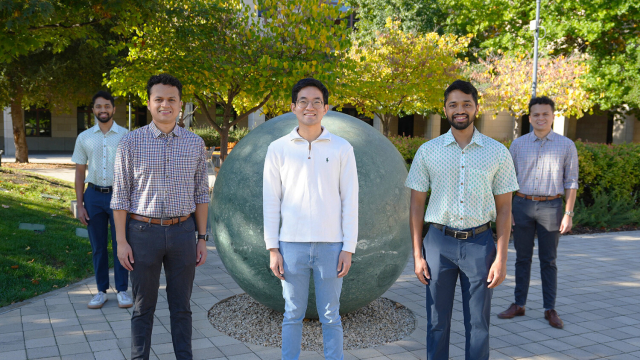
The discovery was achieved by three Stanford PhD students — Hari Ramachandran, Edward Mu, and Eder Lomeli, leading a 23-member team across several U.S. universities, national laboratories, and international partners in Japan and South Korea.Together, they found a way to coax iron into a state once considered unreachable.
Their key innovation lies in fine-tuning the structure of a compound made from lithium, iron, antimony, and oxygen.
When arranged at the nanoscale, the material allowed iron atoms to repeatedly give up and reabsorb five electrons, well beyond the usual two or three.
Iron’s comeback in battery science marks a turning point. Once dismissed as too low-voltage for advanced energy storage, iron-based cathodes are now emerging as sustainable alternatives to cobalt, which is expensive and often mined under hazardous conditions.
Source: Stanford Report
Image: Bill Rivard