


Image: The National Institute of Advanced Industrial Science and Technology
A study has revealed that the substantial retreat of the East Antarctic Ice Sheet approximately 9,000 years ago was driven by a self-reinforcing feedback loop between ice melt and ocean circulation.
The research team was led by Professor Yusuke Suganuma from the National Institute of Polar Research and the Graduate University for Advanced Studies.
The researchers found that the inflow of warm deep water into coastal East Antarctica caused the collapse of ice shelves, which in turn accelerated inland ice loss. The discovery indicates that Antarctic ice retreat is not merely a regional phenomenon; rather, it has the potential to propagate across multiple sectors through oceanic connections, thereby amplifying the overall magnitude of ice loss.
This phenomenon, in which meltwater from one region accelerates melting processes in other regions, is referred to as a "cascading positive feedback." This feedback loop may be a crucial factor in comprehending the instability of Antarctic ice sheets, both in the past and in the present.
The East Antarctic Ice Sheet, which contains more than half of the world's freshwater, is currently undergoing mass loss in certain coastal regions. It is imperative to comprehend the manner in which substantial ice sheets have responded to prior periods of climate warming, as this furnishes indispensable insights into their prospective stability in the context of the present global warming phenomenon.
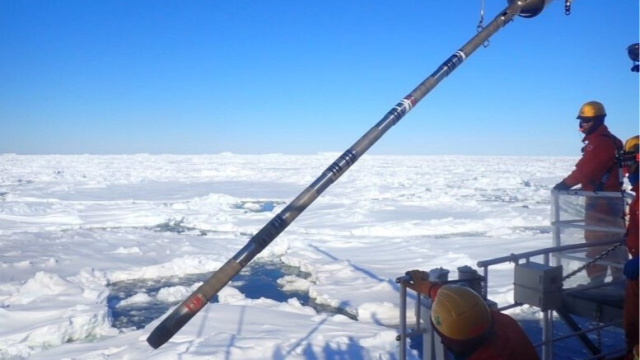
In order to investigate this phenomenon, the research team analyzed marine sediment cores collected from Lützow-Holm Bay, which is located along the Sôya Coast in the vicinity of Japan's Syowa Station. These cores were analyzed in conjunction with geomorphological and geological surveys conducted across Dronning Maud Land. These sediments were obtained through multiple Japanese Antarctic Research Expeditions between 1980 and 2023, including recent sampling from the icebreaker Shirase.
Utilizing a range of analytical techniques, including sedimentological, micropaleontological, and geochemical analyses, the researchers were able to reconstruct past environmental changes in the bay and its environs. This reconstruction was facilitated by the use of measurements of beryllium isotope ratios (10Be/9Be).
The results of the study indicated that approximately 9,000 years ago, the presence of warm Circumpolar Deep Water intensified within the bay, resulting in the collapse of floating ice shelves. As the shelves disintegrated, they lost their buttressing effect, causing inland ice to flow more rapidly towards the ocean.
In order to comprehend the factors that precipitated the augmented influx of warm deep water, the research team conducted climate and high-resolution ocean model simulations. The models demonstrated that meltwater discharged from other Antarctic regions, including the Ross Ice Shelf, disseminated throughout the Southern Ocean. This process resulted in the freshening of the surface layer and the intensification of vertical stratification.
Professor Suganuma concludes, "This study provides essential data and modeling evidence that will facilitate more accurate predictions of future Antarctic ice-sheet behavior. The cascading feedbacks identified in this study serve to underscore the notion that minor regional alterations can potentially engender global ramifications."
Source: Nature Geoscience
Image: The National Institute of Advanced Industrial Science and Technology