


Image: EIH
As solar energy expands its role in Armenia’s power system, one component is quietly transforming how useful and reliable it can be: the battery. While solar panels capture the public’s imagination as the visible symbol of clean energy, it is the integration of battery storage that truly unlocks solar power’s full potential, turning it from an intermittent resource into a dependable, around-the-clock energy solution.
At its core, solar energy is limited by a simple constraint: sunlight is not constant. Panels generate electricity during the day, often producing more than is immediately needed, while demand frequently peaks in the evening when the sun has already set. Batteries resolve this mismatch by storing surplus energy generated during sunny hours and making it available later, ensuring that solar power does not go to waste and can be used precisely when it is most needed.
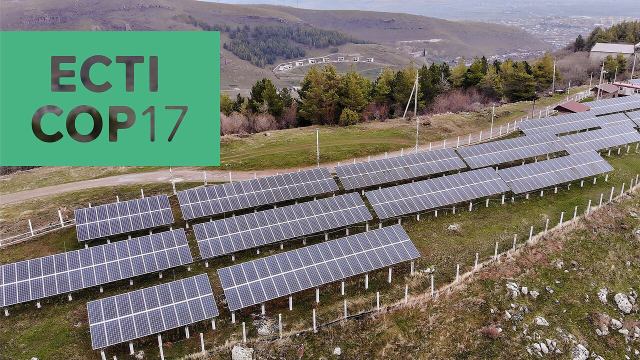
To this end, Energy Invest Holding is in negotiations with Huawei regarding the construction of an energy storage system in Hrazdan for its Arevek solar power plant. Commissioned in 2017, the Arevek solar power plant is Armenia’s first industrial-scale solar facility. According to the project plan, the experimental energy storage system will have a rated capacity of 1000–2000 kW and a round-trip efficiency of 89–92%.
The project was developed in collaboration with the Executive Coaching & Training Institute (ECTI) as an integral part of its COP17 training curriculum, “Eco-Innovation: Transforming Green Solutions into Business Value.”
This capability has far-reaching implications. For households and businesses, batteries provide a measure of energy independence, reducing reliance on the traditional electricity grid. In some cases, particularly in remote or rural areas, they make it possible to operate entirely off-grid. Even in urban environments, battery systems offer reassurance during power outages, keeping essential appliances and services running when the grid fails.
Beyond individual users, batteries play a critical role in stabilizing energy supply. Solar generation can fluctuate due to passing clouds or changing weather conditions, but stored energy helps smooth out these variations, delivering a steady and reliable flow of electricity. This consistency is especially important as more renewable sources are integrated into national power systems, where maintaining balance between supply and demand is essential.
Economic considerations also drive the adoption of battery storage. By storing energy when it is abundant and inexpensive and using it when electricity prices rise, consumers and operators alike can manage costs more effectively. On a larger scale, utility companies rely on batteries to support the grid, preventing overloads, reducing the risk of blackouts, and enhancing overall resilience.
In essence, batteries redefine what solar power can achieve. Without them, solar energy remains tied to the rhythms of daylight; with them, it becomes a flexible and reliable source of electricity, capable of meeting modern demands at any hour. As the world moves toward cleaner energy systems, battery storage is not merely an accessory to solar power—it is an essential partner in making renewable energy truly practical.
Source: EIH news
Image: EIH