


Image: Microsoft Research
Long-term preservation of digital information has long challenged archivists and datacenters, as magnetic tapes and hard drives degrade within decades. Existing archival storage solutions have limited media lifespans that make them less than ideal for preserving information for future generations.
Microsoft has now developed a revolutionary, advanced information carrier known as Project Silica, which uses ultrafast laser technology to store data inside glass, capable of preserving information for up to 10,000 years.
This breakthrough enables data to be stored on durable, inexpensive borosilicate glass (commonly used in kitchen cookware) rather than requiring costly, high-purity fused silica.
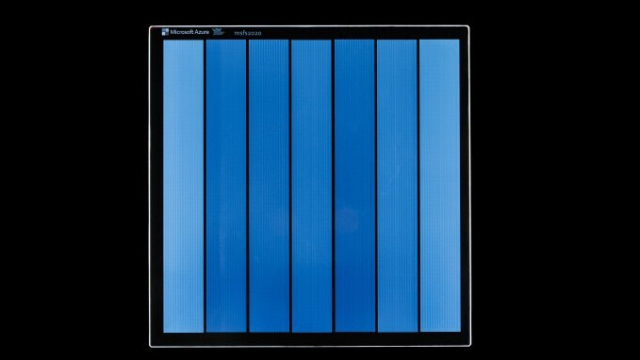
Its capacity is a 120mm square, 2mm-thick piece of glass can hold roughly 4.8 TB of data, equivalent to 2 million books. The glass is resistant to water, heat, electromagnetic interference, and physical degradation, making it an ideal long-term ("cold") storage solution.
The researchers successfully implemented a "phase voxel" method, requiring only a single laser pulse to write data, significantly increasing efficiency. The new system requires only a single camera to read the data, down from three in previous versions, facilitating easier manufacturing of reading equipment.
This technology is designed for secure, long-term archival storage of critical information in cloud data centers, reducing the need for constant, energy-intensive data migrations. The innovation represents a significant step towards commercializing glass-based storage for enterprise applications.
Source: Nature
Image: Microsoft Research