


Image: TU Wien
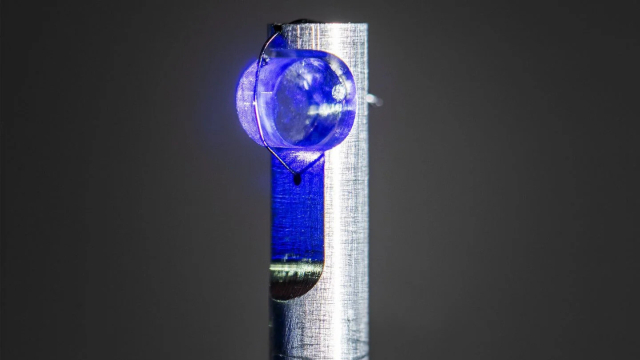
The scientists from the Vienna University of Technology (TU Wien), along with their colleagues, used the thorium nuclear transition technology that was utilized to develop the world’s first nuclear clock in 2024.
They believe it could help test whether the fine-structure constant, which is one of physics’ most fundamental values, is truly constant.
The fine-structure constant, known as the Sommerfeld or alpha, is a dimensionless physical constant that defines how light interacts with matter. It has a value of approximately 1/137.
It also quantifies the strength of the electromagnetic force, the invisible glue that holds atoms together and shapes everything from stars to smartphones. If it shifted even slightly, it would suggest the laws of the universe aren’t as fixed as believed.
According to Thorsten Schumm, PhD, a researcher at the Vienna University of Technology’s (TU Wien) Institute of Atomic and Subatomic Physics, some theories suggest that the fine-structure constant may not be truly constant.
To test the assumption, the team turned to the nuclear clock. Unlike traditional atomic clocks, which measure time based on the behavior of electrons orbiting an atom, a nuclear clock tracks energy transitions within the atomic nucleus.
By precisely measuring this thorium transition, scientists aim to reveal whether the fine-structure constant remains constant or shifts slightly over time.
The thorium-containing crystals for the experiment were produced at the Vienna University of Technology, while the laser spectroscopy measurements were carried out in Boulder, Colorado.
Source: TU Wien
Image: TU Wien